
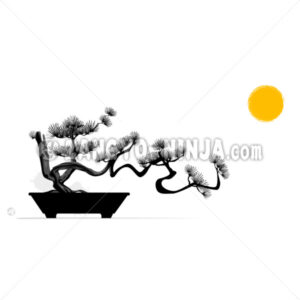
This is a vector file, but the work is drawn in an ink painting style (Suiboku Style). In Japan, the moon and the sun are represented differently. In this work, the yellow circle on the right side is the moon. The yellow circle drawn by foreigners is usually the sun, but in Japan, the … Read More

vector
not rated $0.00$1,490.00 Select license
KOKORO Gratitude – Thank you & hearts in polyglot as ♡shapes - Zangyo-Ninja

This style comes from the Manga culture If you look closely, you can see the letters slightly bulging in a heart shape. In manga, it is common to intentionally distort the lines toward the center or the character in order to make the space look wider, as if looking through a camera’s wide-angle lens, … Read More
vector
not rated $0.00$1,490.00 Select license
KOKORO Gratitude – Thank You & heart in polyglot as ♡shapes - Zangyo-Ninja

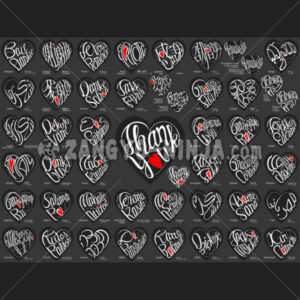
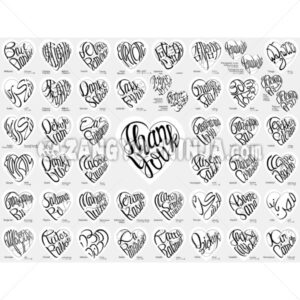
This work contains one heart per language. In 44 languages, the word thank you is formal or polite, or more emphatic than a general thank you, making it a word choice that can be used with family, friends, and others who are not close to you. Kokoro is Japanese for “心”, a word that … Read More

vector
not rated $0.00$1,490.00 Select license
KOKORO Gratitude – Thank you in 44 languages as heart shapes - Zangyo-Ninja

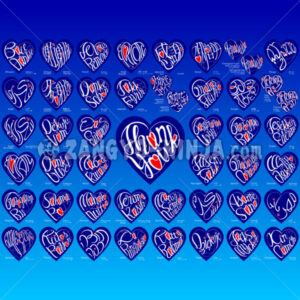
Covers approximately 5,000,000,000 people This is a heart-shaped typographic representation of the word “thank you” in 44 languages. The choice of words has been made so that the thank you in each country are polite or formal, or more emphatic than a general thank you, so that they can be used by friends, family, … Read More
vector
not rated $0.00$1,490.00 Select license
Wine in Kanji, Hiragana and Katakana as grapes - Zangyo-Ninja

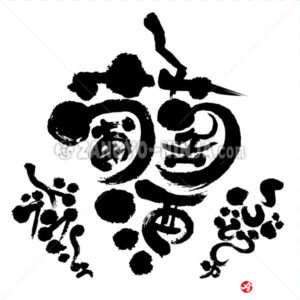
Wine is made from grapes. The shape of the grape is expressed through calligraphy. All of them read “Budoshu” and refer to grape wine, or wine in Japan. In this typographic work, the left side is written in Katakana, the center in kanji, and the right side in Hiragana, with wine written with a … Read More

vector
not rated $0.00$1,490.00 Select license
Thank you in Katakana and 6 langs as love shaped - Zangyo-Ninja

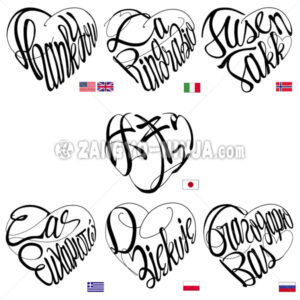
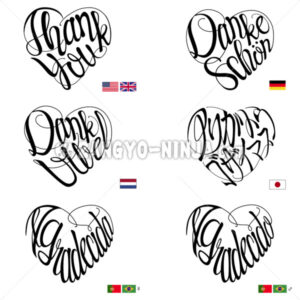
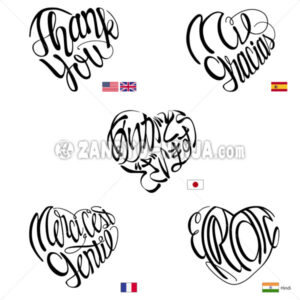
This is a typographic work that expresses the feeling of “Thank you” in the form of English, Italy, Norwegian, Polish, Greek, Russian and Japanese Katakana. The theme is “Heart of Gratitude”. The English version is styled differently The one-line style is Thank you in English. 2-line style Thank you can be found at the … Read More
vector
not rated $0.00$1,490.00 Select license
Thank you in Katakana and 4 langs as love shaped - Zangyo-Ninja

This is a typographic work that expresses the feeling of “Thank you” in the form of English, German, Dutch, Portuguese and Japanese Katakana. The theme is “Heart of Gratitude”. Changes from the previous work The lines of “Thank You” in English are longer and more frequent to emphasize the heart shape. All other languages … Read More

vector
not rated $0.00$1,490.00 Select license
Thank you in Hiragana and 4 langs as love shaped - Zangyo-Ninja

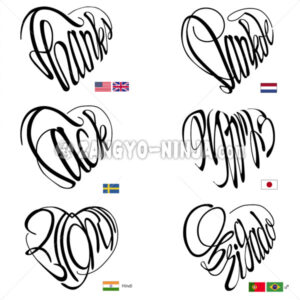
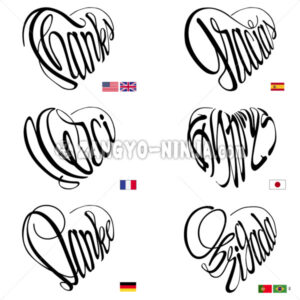
Thank you is expressed in English, Spanish, French, Indian Hindi and Japanese Hiragana as a heart-shaped writing style. And theme is “Heart of Gratitude”. It corresponds to the Japanese honorific of gratitude, “Arigatou Gozaimasu”. The basic hiragana “arigatou” is shown here, but “gozaimasu” is added after it to show respect. This is the current … Read More
vector
not rated $0.00$1,490.00 Select license
Thanks in Katakana & 5 languages as love shaped - Zangyo-Ninja

Thanks is expressed in English, Dutch, Swedish, Portuguese (male), Japanese Katakana and Indian Hindi as a heart-shaped writing style. And theme is “Heart of Gratitude”. The Japanese phrase “thanks” is written in a basic form. This Japanese phrase “arigatou” is the basic form of the word “thanks”. Although there are ways to write it … Read More

vector
not rated $0.00$1,490.00 Select license
Thanks in Hiragana & 5 languages as love shaped - Zangyo-Ninja

Thanks is expressed in English, Spanish, French, German, Portuguese and Japanese Hiragana as a heart-shaped writing style. And theme is “Heart of Gratitude”. The Japanese phrase “thanks” is written in a basic form. This Japanese phrase “arigatou” is the basic form of the word “thanks”. Although there are ways to write it that include … Read More
vector
not rated $0.00$1,490.00 Select license
New years 25 congratulations and greetings - Zangyo-Ninja

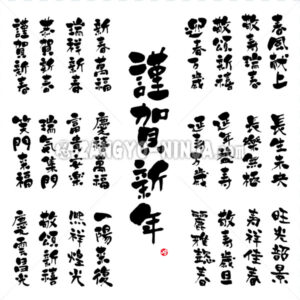
Handwritten and designed greetings for 25 types of New Year’s cards in Kanji. There are 2- and 4-character New Year’s greetings, which are words that are also used as 4-character phrases. (Some of them are not idioms and are not found in dictionaries.) Four-letter New Year’s greeting cards are considered to be used not … Read More

vector
not rated $0.00$1,490.00 Select license
Many thanks in Hiragana & 3 langs as love shaped - Zangyo-Ninja

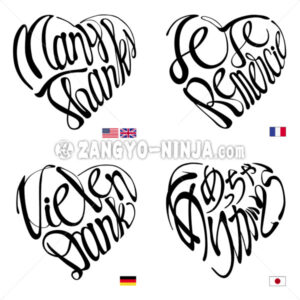
Many thanks is expressed in English, French, German, and Japanese Hiragana as a heart-shaped writing style. And theme is “Heart of Gratitude”. The Japanese phrase “many thanks” is written in a modern way In Japanese, it is “Meccha Arigatou”. This is also written entirely in hiragana. “Arigatou” is equivalent to ‘Thanks’ in English, as … Read More
vector
not rated $0.00$1,490.00 Select license
Thank you so much in Hiragana & 3 lang as ♡ - Zangyo-Ninja

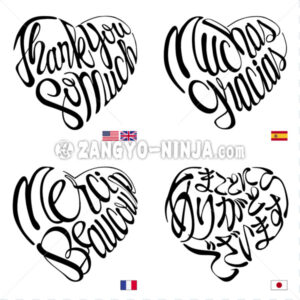
Thank you so much is expressed in English, Spanish, French, and Japanese in a heart-shaped writing style. The heart-shaped expression has many letters, so it is light-weight style and expressed in a 3D style with a bulging heart. And theme is “Heart of Gratitude”. About “Thank you so much” in Japanese The Japanese reading … Read More

vector
not rated $0.00$1,490.00 Select license
Heart shaped thank you in some languages - Zangyo-Ninja

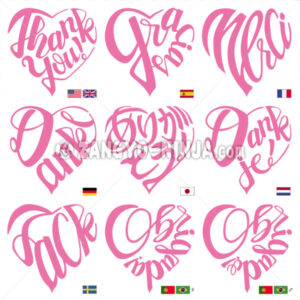
This is a heart-shaped typographic rendition of the word “Thank you” in English, Spanish, French, German, Japanese Hiragana, Dutch, Swedish, and Portuguese. Since Portuguese is divided into male and female words, there are 9 types of designs in 8 languages in total. Heart-shaped design Have you ever forgotten to say thank you when someone … Read More
vector
not rated $0.00$1,490.00 Select license
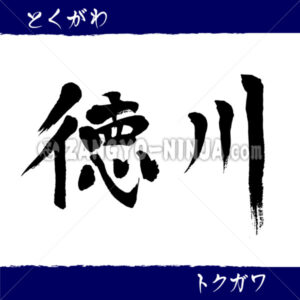
Tokugawa in Kanji, Katakana and Hiragana - Zangyo-Ninja

The surname of the shogunal family of the Edo shogunate, which lasted for approximately 260 years. Originally a local lord in Matsudaira Village, Kamo District, Mikawa Province, who used the Matsudaira surname, but changed it to Tokugawa during Ieyasu’s time. The Edo Shogunate began in 1603 (Keichō 8) when Tokugawa Ieyasu established it, and … Read More

vector
not rated $0.00$1,490.00 Select license
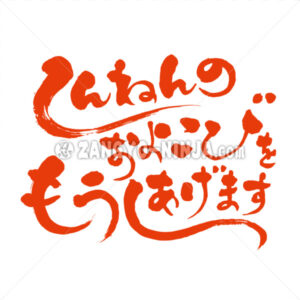
Happy new year as polite words in Hiragana - Zangyo-Ninja

Here is an example of a New Year’s greeting. It is written in hiragana. The translation is a statement of joy for the arrival of the New Year and celebration of it. This is written in honorifics, so it is valid not only for friends but also for close elders. There is a manner … Read More
vector
not rated $0.00$1,490.00 Select license
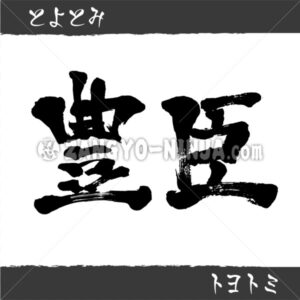
Toyotomi in Kanji, Katakana and Hiragana - Zangyo-Ninja

A daimyo family of the Azuchi-Momoyama period. It began when Hideyoshi was appointed Grand Minister of State in 1586 and granted the Toyotomi surname. History of the Toyotomi Clan Hideyoshi, originally from the Kinoshita clan of Owari Province, became a senior retainer of Oda Nobunaga and changed his surname to Hashiba in 1573 (Tenshō … Read More

vector
not rated $0.00$1,490.00 Select license
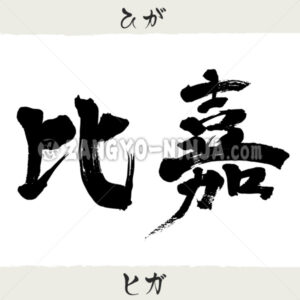
Higa in Kanji, Katakana and Hiragana - Zangyo-Ninja

Widely distributed throughout Okinawa Prefecture, it is the most common surname in the prefecture. Derived from “bijā,” meaning east. Located in the southeastern part of Hamahiga Island, central Okinawa Island. Locally, it is collectively called Bama-Hija with the beach in the northwest. There is a rocky hill called a gusuku at an elevation of … Read More
vector
not rated $0.00$1,490.00 Select license

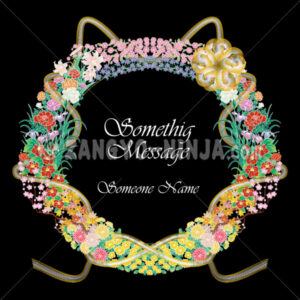
Flowers of the four seasons in Japan are depicted in a Yuzen style ring and wrapped with Mizuhiki, which is meant to be elegant and prestigious. This Mizuhiki is in the shape of a “Kemomimi”. Description for this flower ring design What’s Yuzen Yuzen is an abbreviation for yuzen dyeing, a traditional technique for … Read More

vector
not rated $0.00$1,490.00 Select license
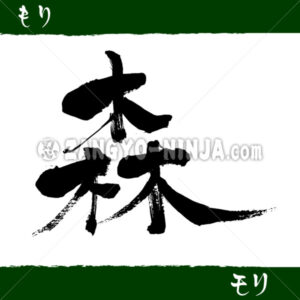
Mori means forest in Kanji, Hiragana & Katakana - Zangyo-Ninja

This word has two main uses. One is to mean “forest.” There is a kanji character using the character for “Ki” (木) that means “Hayashi” (林). Both “森” and ‘林’ mean “forest,” but those who realize that the different kanji characters actually mean different things are very astute. In Japanese, “林” refers to a … Read More
vector
not rated $0.00$1,490.00 Select license
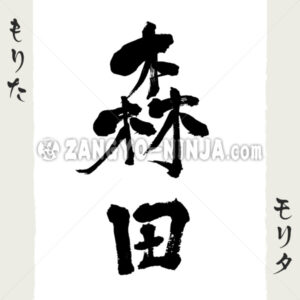
Morita in Kanji, Katakana and Hiragana - Zangyo-Ninja

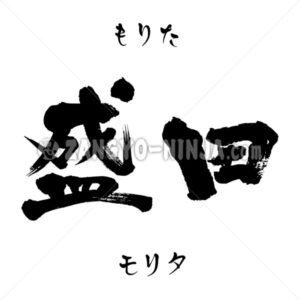
The surname Morita is written vertically. The first line on the left is in hiragana, the middle line is in kanji, and the third line on the right is in katakana, all written vertically. The first kanji character, “森,” represents a forest, and the second character, “田,” refers to rice fields. Our ancestors may … Read More

vector
not rated $0.00$1,490.00 Select license
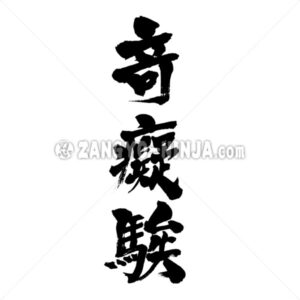
crazy in Kanji - Zangyo-Ninja

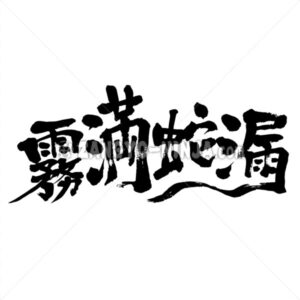
Read as Kichigai, this reading has two meanings. To be in an unusual state of mind, to speak or act in a manner that is not normal. To lose one’s mind. To be abnormally absorbed in one thing. Also, the person. Mania. This is a coined kanji character It reads “Kichigai,” originally written in … Read More
vector
not rated $0.00$1,490.00 Select license
Kilimanjaro in Kanji - Zangyo-Ninja

Kilimanjaro is located in eastern Tanzania, and at 5,895 meters above sea level, it is the tallest mountain in the world as an independent peak not belonging to a mountain range. Kilimanjaro National Park, which includes Mt. Kilimanjaro, was registered as a World Natural Heritage site in 1987 in recognition of its beautiful mountain … Read More

vector
not rated $0.00$1,490.00 Select license
Harvest Fest. Dwarfs carrying a portable shrine - Zangyo-Ninja

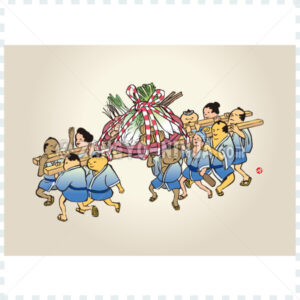
This is a contemporary illustration drawn in brushstroke style. In Japan, there are invisible dwarfs. There is a Japanese folktale about a dwarf called “Issunboushi” who exterminates demons. There is also a world fairy tale about “Seven Dwarfs” who save a princess in a castle. Where do these dwarfs come from and what do … Read More
vector
not rated $0.00$1,490.00 Select license
Extremely large penis in Kanji - Zangyo-Ninja

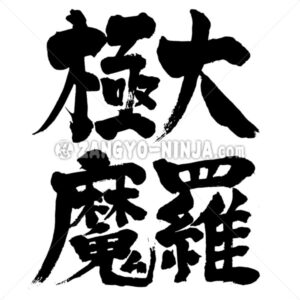
It is two horizontal lines with a total of four kanji characters. The top line is a Kanji character meaning extremely large, and the bottom line is slang for penis. The bottom line reads “Mala” in Japanese The etymology of the word is “something that hinders Buddhist practice and deceives the human mind.” and … Read More

vector
not rated $0.00$1,490.00 Select license

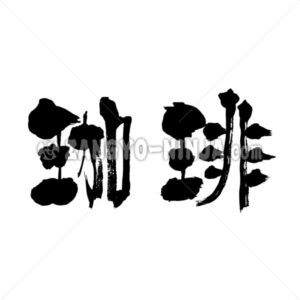
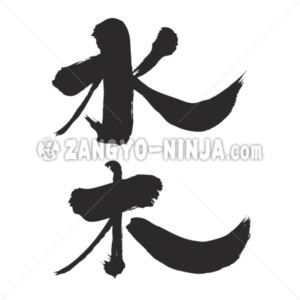
It is one of the most popular beverages in the world. It has a distinctive aroma and pleasant bitterness. Because it contains caffeine, it has a stimulant effect on the nerves. Coffee was first used as a beverage around the 6th century. Initially, coffee was popular among Arabian Muslims as a medicine to improve … Read More
vector
not rated $0.00$1,490.00 Select license
Mizuki in surname Kanji - Zangyo-Ninja

This is 2,857th surname in Japan It is said that the surnames derived from place names are very common as the origin of surnames. Mizuki is presumed to be one of them. MIZUKI and MIZUHIKI are different. MIZUKI is a word used in Japanese surnames and names, as introduced here. MIZUHIKI refers to decorative … Read More

vector
not rated $0.00$1,490.00 Select license
Shibuya old letter in Kanji, Hiragana & Katakana - Zangyo-Ninja

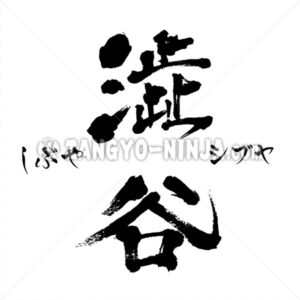
The first character in the center is the old character form of Shibuya. You hardly ever see it nowadays, but this character was used until around the early Showa period. It seems some Japanese people still use this old character form in their surnames. This character is a kanji meaning “bitter taste,” “to stagnate,” … Read More

vector
not rated $0.00$1,490.00 Select license
Turmeric in Kanji - Zangyo-Ninja

Turmeric is a member of the ginger family. It is characterized by its fragrance, bitterness, and golden color, and is used by drying its roots and stems. Besides being used as a spice in curry, it is widely used as a dye for cloth, mustard, cheese, and other food coloring. Turmeric” loved all over … Read More
vector
not rated $0.00$1,490.00 Select license

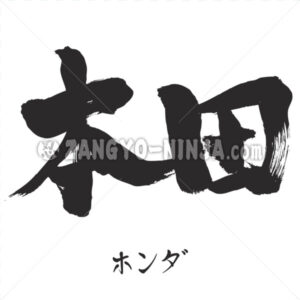
Honda is the 130th common Japanese surname. Origin of Surname, Honda Topography. From the main rice field. It was located in the eastern part of Kagoshima Prefecture (formerly Osumi Province) during the Nanbokucho Period. It is said to have been inhabited in the Kamakura period in the same area. It was in the Ozu … Read More

vector
not rated $0.00$1,490.00 Select license
Yoshida in Kanji, Katakana and Hiragana - Zangyo-Ninja

The origin of Yoshida There are two main theories regarding the origin of the name: one is based on the place name, and the other is derived from “Yoshida,” which refers to rice fields with positive connotations. Cases derived from place names The place name “Yoshida-cho” is said to have originated from the Muromachi … Read More

vector
not rated $0.00$1,490.00 Select license
Germany in Kanji - Zangyo-Ninja

Description for Germany Country located in central Europe from the Netherlands. The country is located in central Europe. The capital is Berlin. Ancient Germania. In the Middle Ages, it was the center of the Holy Roman Empire, but the feudal lords remained divided for a long time. 1871 saw the establishment of a unified … Read More

vector
not rated $0.00$1,490.00 Select license