Home » Sports » Judo in Kanji and Katakana

☆彡☆★☆Christmas Sale 50% OFF!★☆★Use coupon code“6pqpuw7j”. ★Excludes ‘ITEM’ on this site. ★Valid until December 25th. ★Enter“6pqpuw7j” at checkout.☆★☆SAVE 50%★☆★☆彡

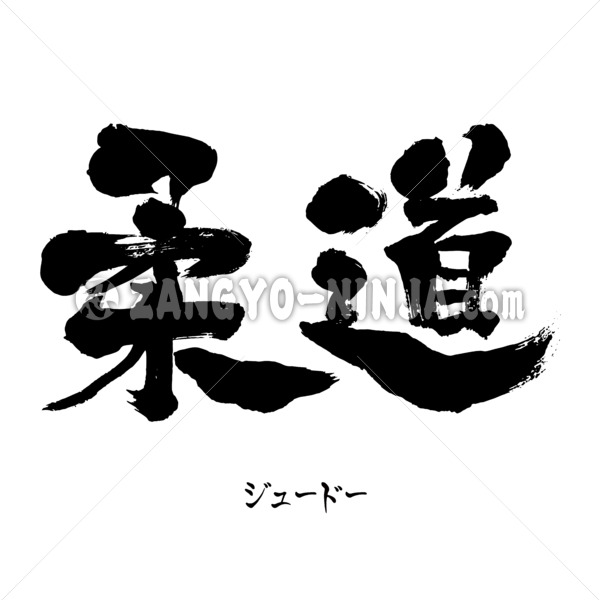
Judo in Kanji and Katakana

created by designer

$0.00$1,490.00

600x600
$0.00
1920x1920
$4.80
6000x6000
$9.80
Full
$19.80
Full
$980.00
Full
$1,490.00
Category:

Description for Judo

A martial art founded by refining ancient jujutsu techniques. Jigoro Kano established Kodokan Judo from an educational perspective, aiming for physical training, mental discipline, and competition. It has since become one of the world’s most widely practiced sports.
It has been an official Olympic sport since the 1964 Tokyo Games, and a women’s event since the 1992 Barcelona Games.
“Gentleness overcomes force.” Utilize your opponent’s strength to control them. This allows even the smaller to defeat the larger. This is the fundamental principle of Judo.

Overview of Judo Techniques

Judo techniques consist of three categories: throwing techniques (standing techniques, sacrifice throws), holding techniques (pinning techniques, strangulation techniques, joint locks), and striking techniques (striking, punching, kicking). In randori (practice) and matches, dangerous techniques like striking are prohibited.

Competition Rules and Scoring

The official competition area is a 50-mat tatami space (approximately 9.1m square). Competitors wear a judogi. Matches are held in open weight or weight-class divisions and are single-point matches within a set time limit (3 to 20 minutes).
If no Ippon is scored, victory is determined by superiority based on criteria such as Waza-ari (advantage point), Keikoku (warning), Yuuko (effective point), and Chui (caution) (international rules add Kōka (effective action) and Shido (admonition)).
Dan ranks (10th Kyu to 1st Dan) and Kyu ranks (1st Kyu to 5th Kyu) are examined and certified by the Kodokan.

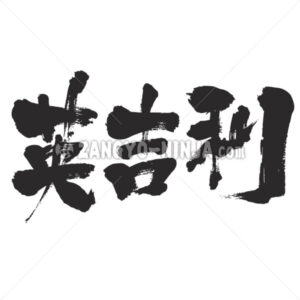
Explanation of this calligraphy

The top section is in kanji, the bottom in katakana, all written horizontally.
The kanji “柔” (yawara) signifies softness and flexibility. “道” (dō) means ‘way’ or “path,” a character frequently used in Japanese sports and performing arts. It conveys the idea of walking a path forward. This path is not a single straight road; it sometimes branches or connects, sometimes ascends or descends, and can be easy to traverse or rugged.
Technical Details AI Vector, 206.15 KB
, ,

People also views for about Judo

   
Zui Quan in Kanji - Zangyo-Ninja

Zui Quan in Kanji

A type of state martial arts. A figurative fist imi [...]
vector
FREE~ View detail

karate in kanji

a traditional Japanese system of unarmed combat. An [...]
vector
FREE~ View detail
Kung fu in Kanji - Zangyo-Ninja

Kung fu in Kanji

A Chinese martial art similar to Karate. In other p [...]
vector
FREE~ View detail
baseball in Kanji - Zangyo-Ninja

baseball in Kanji

A competition in which two teams of nine people alt [...]
vector
FREE~ View detail
billiards in Kanji - Zangyo-Ninja

billiards in Kanji

Descroption for billiards An indoor game in which p [...]
vector
FREE~ View detail

Works recommended by creator Aokage

Naruto wrote by vertical in Katakana - Zangyo-Ninja

Naruto wrote by vertical in Katakana

Description for Naruto Meaning of this character Th [...]
vector
FREE~ View detail
Ishida as surname in Kanji, Katakana and Hiragana - Zangyo-Ninja

Ishida as surname in Kanji, Katakana and Hiragana

One of the Japanese surnames. This surname is relat [...]
vector
FREE~ View detail
Mizuki in surname Kanji - Zangyo-Ninja

Mizuki in surname Kanji

This is 2,857th surname in Japan It is said that th [...]
vector
FREE~ View detail

Coffee in Kanji

It is one of the most popular beverages in the worl [...]
vector
FREE~ View detail
eccentric, unprecedented in Kanji - Zangyo-Ninja

eccentric, unprecedented in Kanji

Doing things that no one has ever done. Breaking th [...]
vector
FREE~ View detail
AOKAGE
998

Aokage

He won several gold and silver awards in Japanese-calligraphy (Shodo). He loves Sushi and Sashimi. Having practiced calligraphy since childhood, his father was qualified as a teacher. Aokage(青景) comes from the blue landscape like the sea, the clear blue sky. And the blue shadow. Shadow means a ninja.

People as smart as you are also looking at